


Introduction
Looking to create the best investment portfolio in Switzerland in 2025?
With its stable economy, strong currency (CHF), and world-class banks, Switzerland remains one of the safest and most attractive places to invest.
In this guide, we’ll cover:
- Core elements of a Swiss investment portfolio
- Diversification strategies for 2025
- The best Swiss banks and platforms (UBS, Swissquote, DEGIRO)
- Tax-efficient investing in Switzerland
- Latest trends (AI & ESG investing)
- Example portfolios: conservative, balanced, aggressive
👉 Whether you are a beginner or an experienced investor, this article will help you build a tax-optimized and diversified portfolio in Switzerland.
What is an Investment Portfolio?
An investment portfolio is a collection of assets designed to grow and protect wealth. In Switzerland, investors often include:
- Swiss blue-chip stocks (Nestlé, Novartis, UBS)
- Global equities & ETFs
- Bonds (CHF-denominated & global)
- Swiss real estate (REITs)
- Pension funds (pillar 3a / 3b)
- Gold & alternatives (crypto, private equity)
💡 Unique to Switzerland: Pension fund investments (pillar 3a) can be tax-deductible, making them essential in most portfolios.
Why Portfolio Diversification Matters in Switzerland
Swiss investors face specific risks such as:
- Strong CHF reducing foreign investment returns
- Over-concentration in pharma & banking stocks
- Real estate price fluctuations
Benefits of diversification in Switzerland
- Stability in uncertain markets
- Protection against CHF volatility
- Long-term wealth building
- Tax efficiency via 3a investments
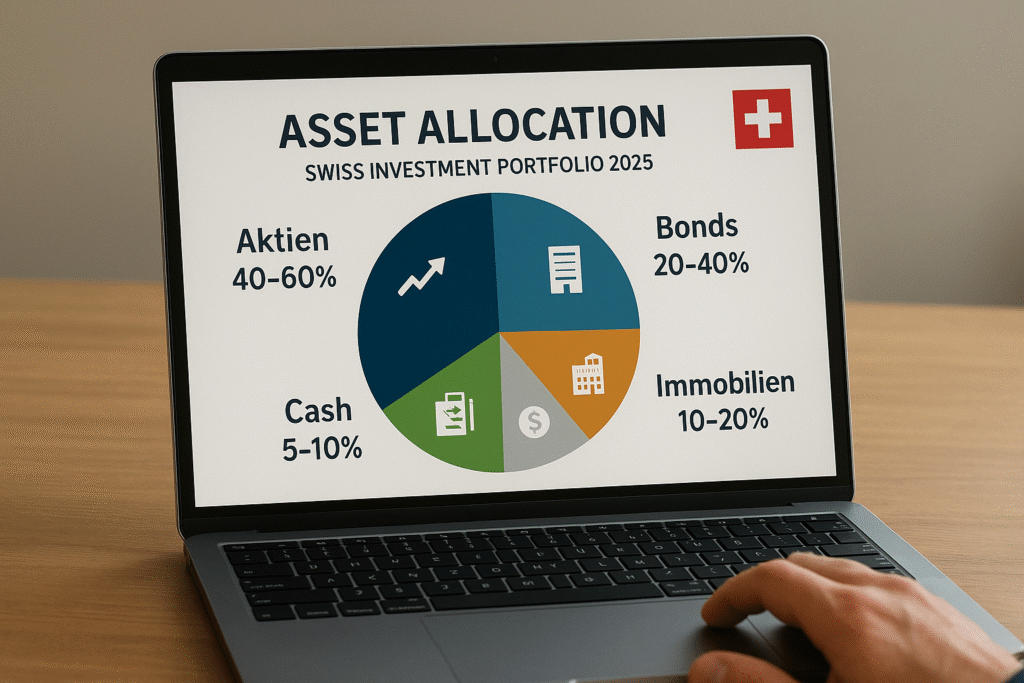
Swiss Asset Allocation Models (2025)
| Asset Class | Typical Allocation | Risk Level | Potential Return |
|---|---|---|---|
| Swiss & Global Stocks | 40–60% | High | High growth |
| Bonds (CHF + Global) | 20–40% | Low/Medium | Steady income |
| Real Estate | 10–20% | Medium | Stability |
| Cash (CHF) | 5–10% | Very Low | Liquidity |
| Alternatives (Gold, Crypto) | 5–10% | High | Hedge & diversification |
Example Portfolios for Switzerland
1. Conservative Portfolio
- 50% Bonds (CHF)
- 25% Swiss blue-chip stocks
- 15% Real estate funds
- 10% Cash
👉 Perfect for retirees or risk-averse investors.
2. Balanced Portfolio
- 40% Global & Swiss stocks
- 30% Bonds
- 20% Real estate (Swiss REITs)
- 10% Gold/Crypto
👉 For medium-risk investors aiming for growth & stability.
3. Aggressive Portfolio
- 70% Equities (Swiss + tech/global)
- 10% Bonds
- 10% Alternatives (crypto, private equity)
- 10% Real estate
👉 For younger investors with long-term horizons.
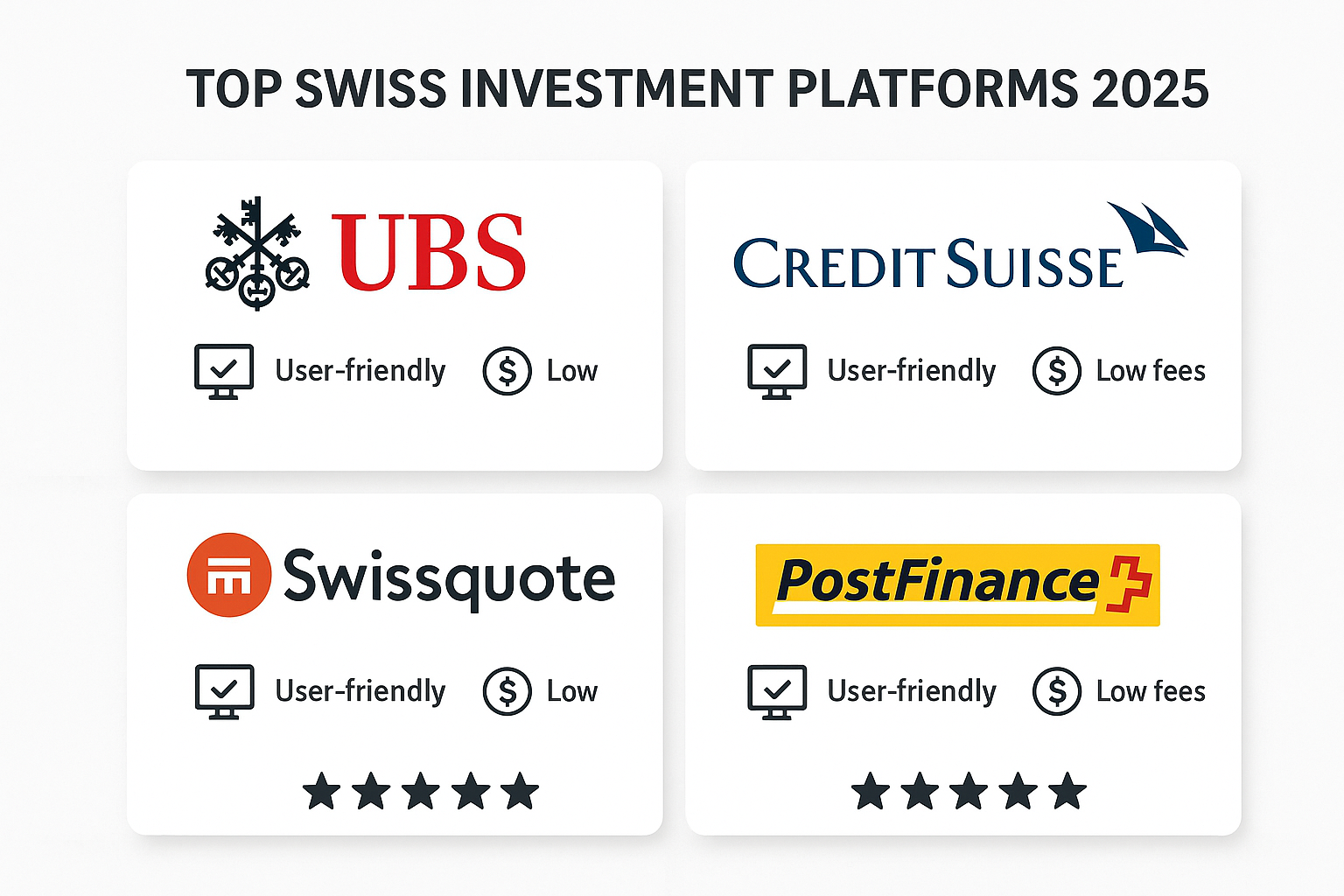
Best Banks & Platforms for Swiss Investors
| Platform | Fees | Ease of Use | Best For | Rating |
|---|---|---|---|---|
| UBS | High | Advanced tools | High-net-worth investors | ★★★★☆ |
| Credit Suisse | High | Professional advice | Private clients | ★★★★☆ |
| Julius Baer | High | Tailored wealth solutions | Wealthy investors | ★★★★☆ |
| Swissquote | Medium | Easy platform, ETFs, crypto | Retail investors | ★★★★★ |
| PostFinance | Medium | Beginner-friendly | New investors | ★★★★☆ |
| DEGIRO | Low | DIY, global markets | Cost-conscious investors | ★★★★★ |
| Interactive Brokers | Low | Global reach | Advanced traders | ★★★★☆ |
👉 Compare fees and services before committing.
Tax Considerations in Switzerland
Taxes can make or break your investment returns. Key points:
- Capital gains: Tax-free for private investors (if not classified as professional traders).
- Dividends: Taxed as income.
- Wealth tax: Applies yearly, depending on canton.
- Pillar 3a investments: Contributions are tax-deductible.
🔗 Official info: Swiss Federal Tax Administration
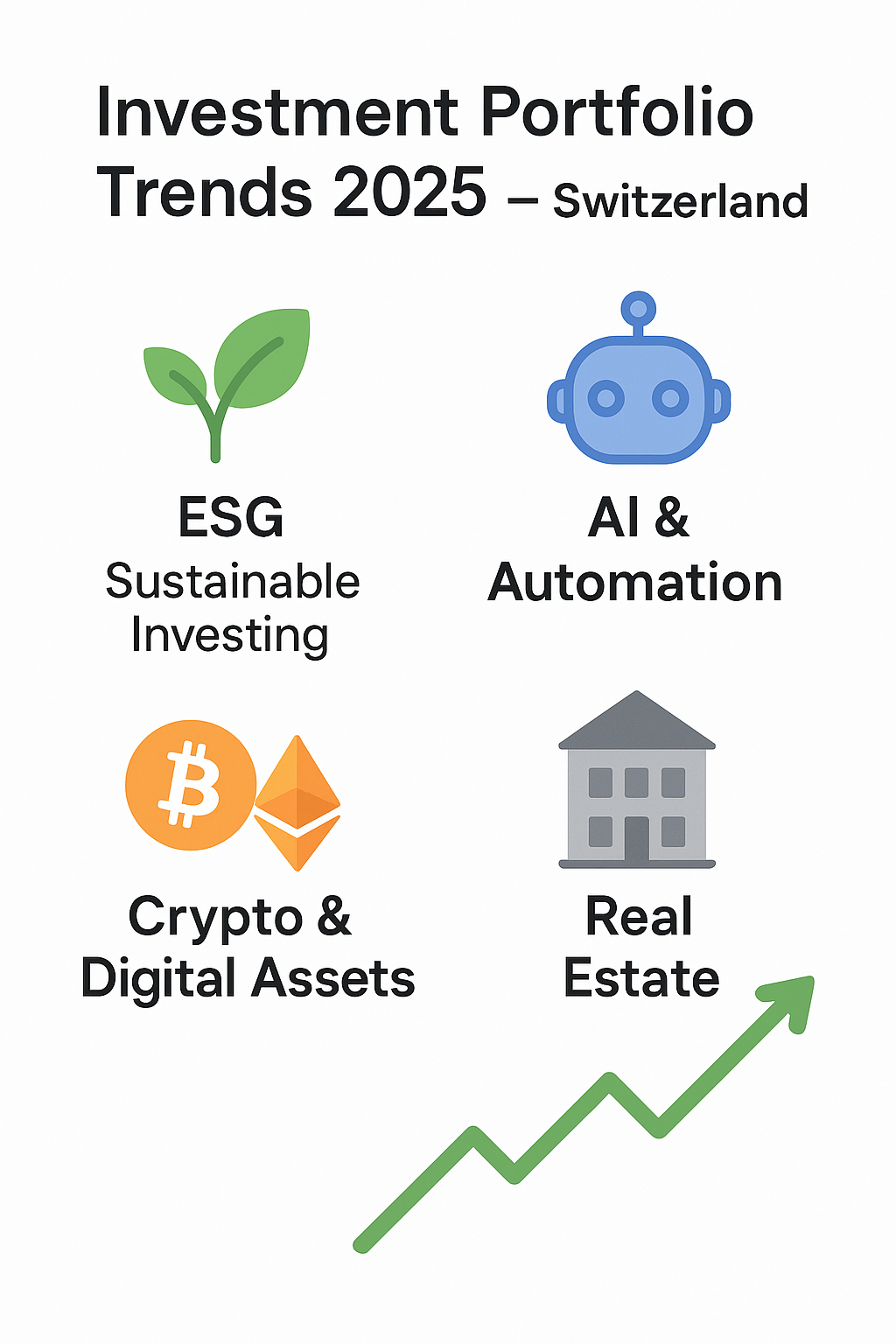
Trends for Swiss Investors in 2025
- Sustainable & ESG investing
More Swiss investors are focusing on green portfolios. - AI-driven investment tools
UBS and Swissquote now offer AI-powered portfolio analysis. - Crypto & blockchain adoption
Switzerland remains a crypto hub (Zug “Crypto Valley”). - Fractional investing
Platforms now allow investing in stocks & real estate with smaller amounts.
Step-by-Step: Build Your Portfolio in Switzerland
- Define financial goals (retirement, house, wealth growth).
- Choose allocation based on risk tolerance.
- Pick a platform (Swissquote, DEGIRO, UBS).
- Optimize with tax-advantaged accounts (pillar 3a).
- Rebalance portfolio yearly.
Internal Links (Add to Your Blog)
- Swiss Health Insurance Guide 2025
- Best Swiss Banks for Expats
- How to Open a Swiss Bank Account Online
FAQ (Optimized for Google Snippets)
1. What is the best investment portfolio in Switzerland?
A diversified mix of Swiss stocks, bonds, real estate, and pillar 3a funds.
2. Are capital gains taxed in Switzerland?
No, they are tax-free for private investors (unless trading professionally).
3. What is the minimum to start investing in Switzerland?
As little as CHF 100 via Swissquote or DEGIRO.
4. Which bank is best for investing in Switzerland?
UBS for private wealth, Swissquote for retail, DEGIRO for low-cost DIY.
5. Can foreigners invest in Switzerland?
Yes, but access depends on residency and platform.
Conclusion
An investment portfolio in Switzerland should balance stability, tax efficiency, and global diversification.
- Conservative investors → bonds, pillar 3a, Swiss stocks.
- Balanced investors → stocks, bonds, real estate.
- Aggressive investors → equities, crypto, global markets.
👉 Start Now: Open an account with Swissquote or DEGIRO and begin building your future.
References (External Links)
- UBS – Investment Solutions
- Swissquote – Investing Platform
- DEGIRO – Swiss Investors
- Interactive Brokers
- FINMA – Swiss Financial Authority